Baiba Braže
Minister of Foreign Affairs of Latvia
The 360-degree strategic environment has changed dramatically. It requires reflection and action to address the interlinked challenges we face as NATO and as individual Allies. My country, Latvia, has been a proud and committed Ally, guided by a clear understanding of why the Alliance remains as relevant as ever: to deter against all threats, defend its members, and preserve peace through strength.
When Latvia joined NATO 22 years ago, the Alliance was in a very different place. It was adapting to a world characterised by the slogan “out of area or out of business.” Threats were often perceived as distant and beyond our borders. Latvia contributed to Allied out-of-area peacekeeping and counterterrorism operations and supported our American Allies in their hour of need. At the same time, we never lost sight of the fact that our NATO accession was never just about projecting stability abroad. Our experience of a fifty-year occupation by an empire has led us to continuously emphasise the fundamental principle of collective defence.
Our experience of a fifty-year occupation by an empire has led us to continuously emphasise the fundamental principle of collective defence.
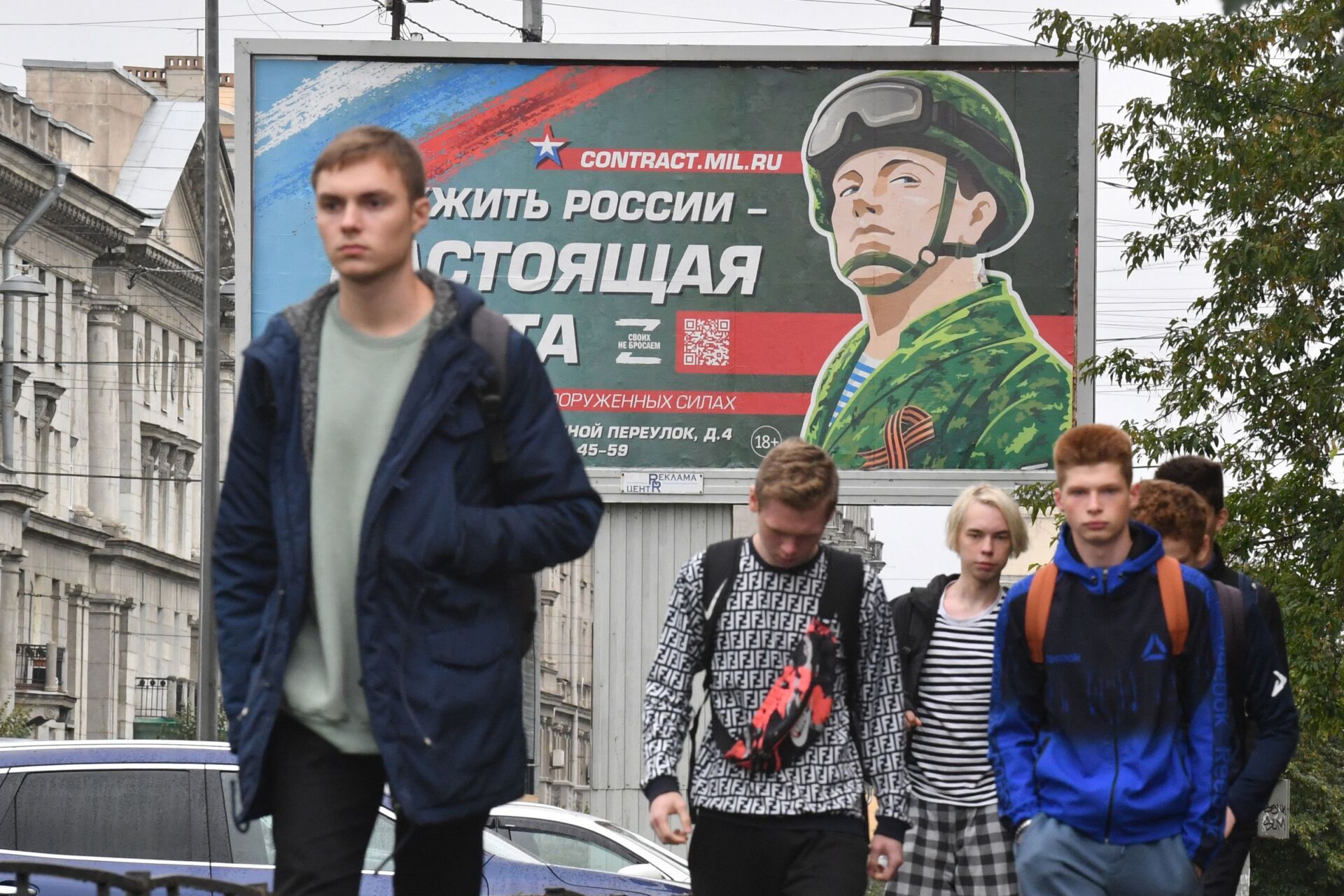
In 2022, Russia launched an illegal, unprovoked war of aggression against Ukraine under false pretences. Contrary to the Kremlin’s propaganda, NATO never threatened, intimidated, or otherwise sought to undermine Russia. Neither did Ukraine. Putin has sacrificed 1.3 mn Russians, wrecked the Russian economy, and irreparably damaged its international standing, but failed to achieve any of its strategic war objectives. And yet, this March marked another record month of civilian casualties from Russia’s barbaric attacks, most occurring in Ukrainian cities and towns far away from the frontline.
In response to Russia’s sub-conventional attacks against NATO Allies, we have seen in practice that NATO means business. NATO’s deterrence by physical presence and denial works. For instance, since the launch of NATO’s military mission Baltic Sentry in January 2025, we have seen no further incidents of sabotage of critical undersea infrastructure in the Baltic Sea. Likewise, the deployment of NATO’s multi-domain mission Eastern Sentry has further strengthened the Alliance’s deterrence posture by providing an integrated defensive presence along the Eastern flank.
NATO’s deterrence by physical presence and denial works.
Globally, however, the balance of power is shifting, and the rules-based international system is increasingly under strain. We see clearly that Russia’s war in Ukraine and the conflict in the Gulf are not isolated crises. Iran’s and North Korea’s military and technological support have strengthened the Kremlin’s ability to wage war in Europe. China continues to sustain Russia’s war economy. In turn, Russia is exacerbating a global economic and energy crisis by enabling Iranian attacks against our partners in the Gulf. Meanwhile, Ukraine is actively helping countries to defend themselves against the attacks Ukrainians know so well.
These interlinked crises have shown that for NATO to remain both militarily and politically credible, Europe and Canada must take on greater responsibility for conventional deterrence and defence. Some have described this shift as “NATO 3.0,” but in truth, it is closer to a return to NATO’s original core mission. The Alliance’s enduring strength has always been its ability to adapt to its strategic environment and respond decisively to the threats Allies face. Strong deterrence and defence, underpinned by real investment in hard defence capabilities, must once again be at the centre of NATO’s mission.
Latvia takes this responsibility seriously. The Latvian government made a clear and binding commitment to invest 5% of our GDP in defence annually. We are the first Ally to enshrine this commitment into law. We do this because of our shared threat assessment. And because it is a promise we made to ourselves and to our Allies at the Hague Summit.
Over the course of its 77-year history, the Alliance has not been immune to disagreements. Yet above all else, a strong transatlantic link with the United States and Canada remains indispensable to our collective security. Europe can and should do more, and right now, European Allies are playing leading roles in NATO’s military missions to secure the Eastern flank, the Baltic Sea, and the Arctic, bolstering our deterrence and defence. Canada has shown outstanding leadership in developing the NATO Multinational Brigade in Latvia.
Commitments must translate into capabilities, and timelines must be accelerated.
Encouragingly, defence spending among European Allies and Canada increased by 20% in 2025 compared to the previous year. This is real progress. Yet it still falls short of what is required. Commitments must translate into capabilities, and timelines must be accelerated. Waiting until 2035 to meet higher defence spending targets does not align with the urgency of today’s threats.
Russia’s full-scale invasion of Ukraine has exposed critical weaknesses, particularly in Europe’s defence industrial capacity and adaptability. In response, we are seeing long-overdue investments in ammunition production, supply chains, and procurement systems. But these are still slow. We clearly see the need for urgent investment in high-end air defence, low-cost drone interceptor technologies, and robotics, many of which are pioneered by our Ukrainian friends.
As we prepare for the Ankara Summit, the principle of ‘peace through strength’ must guide us forward. Weakness creates opportunity and emboldens aggressors. Only by building real conventional capabilities, investing in technological superiority, and supporting Ukraine can we summon the strength to keep our citizens safe.
This article was written for the Lennart Meri Conference special issue of ICDS Diplomaatia magazine. Views expressed in ICDS publications are those of the author(s).