Tetiana Fedosiuk
Publication Manager / Editor of Diplomaatia
There are credible signs that Russia is preparing the ground for a mobilisation. Unlike in the autumn of 2022, Moscow does not need a mass call-up of reservists. Russia can replenish, or even grow, its armed forces in quieter ways than a blunt televised address — ways it has been using for some time, creeping and unannounced. This article explores what means are available for mobilising without a mobilisation.
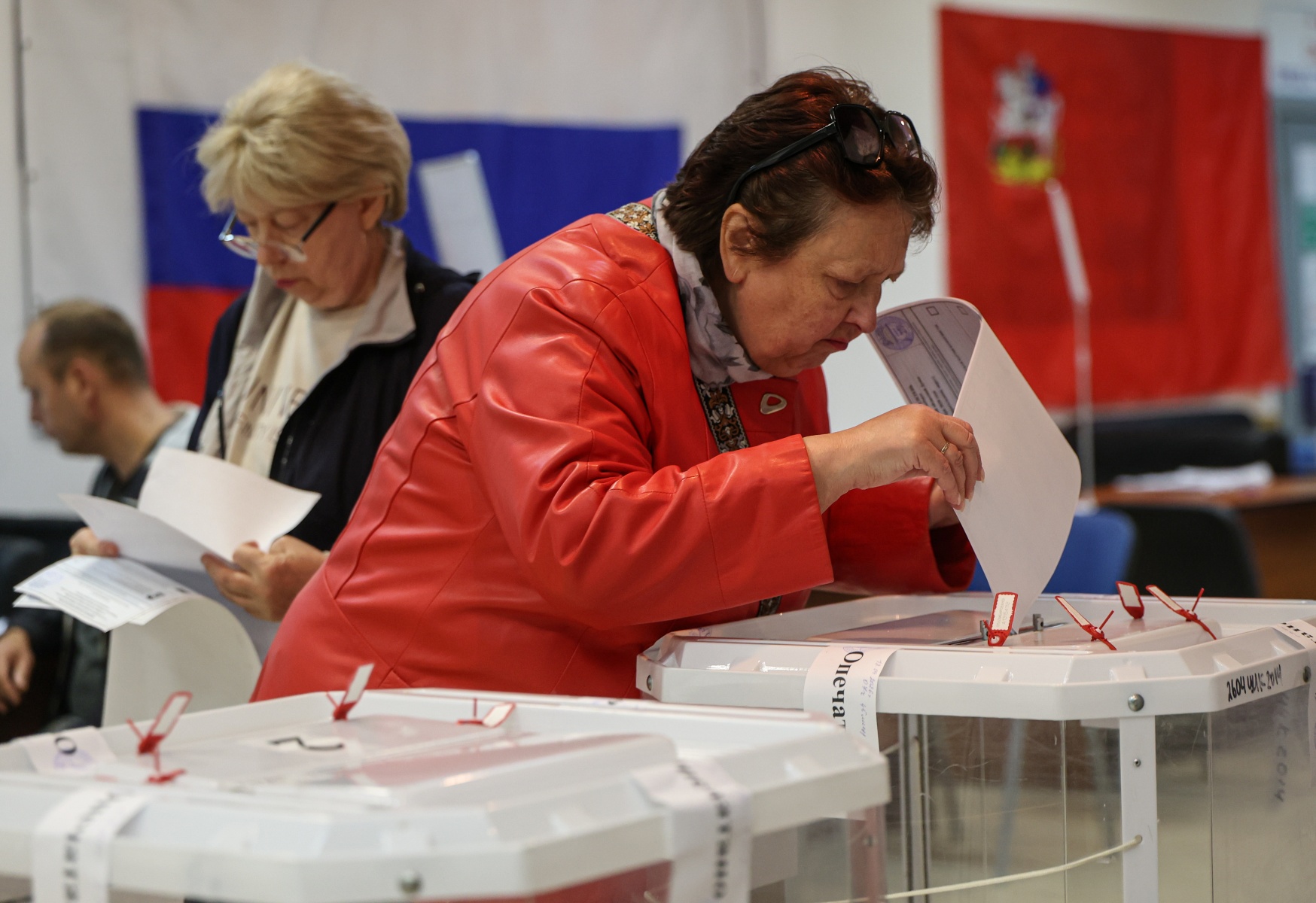
For months now, the talk of imminent mobilisation in Russia has taken many forms: leaks, media reports, speculation and heated social media debate, official statements, including from Ukraine’s President Volodymyr Zelensky, and Russian rebuttals, not least from Putin himself. It was — or perhaps still is — to come hard on the heels of the State Duma ‘elections’.
French President Emmanuel Macron said there were “several signs” that Russia was preparing to mobilise and sacrifice around 300 000 men, calling the scenario plausible and tying it to the goal of capturing the Donbas. He added that “now it’s clear that Russia will do it. The question is whether it will announce it or do everything without a public announcement.” That distinction, however, is crucial to understanding the threat in its full scope and its many layers.
The first conceptual point to settle is that no new mobilisation in Russia will begin in the same manner it did in September 2022, with President Vladimir Putin’s televised address. Because, in fact, it has never ended. Putin never signed a decree to that effect. Therefore, ‘partial mobilisation’ in Russia has continued, just less pronounced than in the hectic first weeks after the announcement. Forced mobilisation, for instance, has been most aggressive among the least protected population of all, that of the occupied territories of Ukraine. Separately, Russia has moved to year-round conscription.
Mere talk of a mobilisation may serve several more goals — short of rallying troops for a new ground offensive in Ukraine.
So, the legal basis for mobilisation remains available — although dormant — should the Kremlin choose to enforce it. Whether it will (or wants to) hardly anyone but Putin knows. Whether a new wave of mobilisation comes is a separate matter. This is not to dismiss the threat, not at all. However, as the Kremlin weighs its options, mere talk of a mobilisation may serve several more goals — short of rallying troops for a new ground offensive in Ukraine. This conversation is itself doing work inside Russia, and rather more outside it.
We do not know when or whether a new wave of mobilisation will hit, nor how massive it will be or would need to be. Yet there are things we do know, or can deduce, beginning with manpower — central to Moscow’s strategy of attritional pressure throughout the war.
Janis Kluge, who tracks Russian recruitment through Finance Ministry and regional budget data, found that sign-ups fell to roughly 800 a day in the first quarter of 2026, down about a fifth from the same period in 2025. By the second quarter, the figure had stabilised at around 1 000 a day, roughly 30 000 a month, only slightly below last year’s running total for the same period. That was, however, considered enough to offset current losses, to meet the military’s needs, but not to expand the army. There is no consensus, though. In mid-September, the Institute for the Study of War put casualty rates above recruitment rates by thousands a month, judging that, in time, the Kremlin will have to adjust its approach and “conduct some form of involuntary reserve call-up in order to sustain its war effort.”
So, Russia may not need a mass mobilisation to keep doing what it is doing now. But it would need one to assemble manpower for something substantially larger. An undertaking on that scale would take time to build and would not be invisible to western intelligence services, for example, through the movement of formations and rail traffic schedules, as well as in training capacity and in ammunition stocks, among other signals legible to Russia’s own bureaucrats inside the system.
An army preparing to put several hundred thousand ‘extra’ men into uniform has to procure those uniforms, alongside the field kit. Were it to care for those men, it would also need tourniquets, stretchers, and plasma. Ukraine’s Foreign Intelligence Service, which did report in August that Moscow was laying administrative and technical groundwork for a mobilisation, noted in the same assessment that there were “no signs of preparations for a large-scale call-up of reservists,” and judged that the Kremlin would not risk announcing one before the Duma ‘elections’. It added that procurement of military gear and medical supplies remained at 2025 levels, and concluded that Russia would first try to cover its recruitment shortfalls through higher bonuses, pressure on employers, and the internal redistribution of troops.
The Kremlin’s current pay-for-play scheme has worked: people are still signing contracts with the Russian Armed Forces voluntarily. Sign-up bonuses are at record highs, and regions are bidding against one another. The machine may be straining, but straining and breaking are not the same thing. This (in essence) mercenary scheme is expensive but sustainable.
This mercenary scheme is expensive but sustainable.
The ‘ailing economy’ counterargument rests on a familiar set of symptoms: oil and gas revenues have dwindled; the federal budget deficit is the widest since the beginning of the full-scale invasion; taxes have risen to make ends meet, with the newest bill introduced days after the 2026 election; the National Wealth Fund could be exhausted; the government was asked to freeze non-military spending, to name just a few.
But it does not disprove anything. On the contrary, none of these or other socio-economic ills has moved Putin to change his mind and abandon his maximalist goals, neither in rhetoric nor on the ground. Nor have they produced a single decision to cut military expenditures. For as long as the war remains the chief priority for the commander-in-chief, the Kremlin will find the money for another year of recruitment bonuses. As economist Vladislav Inozemtsev argues, within this “death economy,” the government need only redirect the ‘death benefits’ (гробовые) towards other incentives such as a (promise of) higher monthly pay. And prospective soldiers would line up to sign contracts “like the queue for the Mausoleum in Soviet times.” The average life expectancy of a Russian recruit in assault units is measured in weeks at best. If taken up, this advice would let the Kremlin both maintain the social contract and avoid plunging further into debt.
If Russia wants to, it can drive up numbers. It can easily do so via covert recruitment practices: a combination of deception, manipulation, and coercion in addition to payouts. This is what human rights lawyers call “creeping mobilisation.”
Most recently, the Russian state has opened a new recruitment channel — university students. At one end, they are lured into signing contracts — usually to serve in drone units, supposedly away from any real danger — with lucrative perks: prestigious universities in Moscow and St Petersburg offer tuition-free places, academic leave, one-time payments, and the clearing of academic debts. At the other, failing students are threatened with expulsion during the examination period, left with no option but to sign — or be drafted.
This simple message is being pitched to the Russian domestic audience at large. It is a creative marketing campaign for reverse recruitment: sign the contract now and take the money, or wait till conscripted and taken for nothing. Every rumour, every ‘anonymous source close to the presidential administration and security services‘, especially if quoted in the Russian ‘opposition’ media, and every subsequent denial, helps sell the contract system at no cost to the Kremlin. A man who believes mobilisation is imminent has an incentive to walk into the enlistment office and collect the bonus while it is still on offer. Occasional raids (облавы) only help make this point, especially among those already considering signing a contract with the Russian armed forces.
Enlistment offices, too, no longer have to do any heavy lifting: they have lists ready and digitised. If Russia does need to lift the rate somewhat without paying more, it need no longer be as crude about it as it was before. This is the real, under-discussed difference from the autumn of 2022, when Russia, too, was experiencing a setback at the front triggering the original ‘partial mobilisation’.
But back then, Moscow did not know where its own manpower resources were. It had old paper records, which is why it ended up chasing men in the streets and handing out draft notices at metro stations. Since then, it has built a unified electronic register of those liable for service out of the Gosuslugi state services ecosystem. The state now holds addresses, workplaces, education, tax filings, medical data, and court and debt history for its conscription pool. And the powers attached to that register have only expanded. Equipped with extensive surveillance data, it can target individuals not only by delivering e-summonses but also by identifying those most susceptible to coercive recruitment.
Selective tactics allow the Kremlin to call up numbers small enough to avoid a national shock and precise enough to fill the manpower gaps, sparing the Russian public the traumatic scenes of 2022.
A draft notice is deemed served days after it appears in the register, and from the moment it is lodged, a draftee is barred from leaving the country, among other restrictions should they fail to present themselves. This lingering threat pushes men towards pre-emptive choices: one is to sign a contract voluntarily; the other is to try to flee the country.
Such selective tactics allow the Kremlin to call up numbers small enough to avoid a national shock and precise enough to fill the manpower gaps, sparing the Russian public the traumatic scenes of 2022.
So, if neither maths nor necessity forces an overt mass mobilisation, what is the talk for? The audience may reside not only in small-town Russia but also in foreign capitals.
The message Moscow is broadcasting is that Russia is gathering masses. That the reinforced Russian army is preparing to march on Kyiv again, or even on Warsaw. That the warnings issued by one western intelligence service after another about a future confrontation are about to be vindicated, sooner than expected. Most recently, the Danish Defence Intelligence Service assessment warned of a “low but growing risk that Russia will launch a limited military attack against one or several NATO countries bordering Russia.” Meanwhile, earlier this summer, US intelligence assessed Putin as increasingly willing to authorise a limited attack designed to test Article 5, without crossing the threshold for a collective response. This was, reportedly and partially, why CIA Director John Ratcliffe flew to Moscow. American officials described the logic they saw as “escalate to de-escalate.”
The Danish service, which considers a limited attack possible even while the war in Ukraine continues, nonetheless sees no indications that Russia is preparing another full-scale invasion, and judges that generating the forces for one would take at least six months. Dutch military intelligence holds that a conventional war against the Alliance is “virtually out of the question” for as long as Russia is fighting in Ukraine. In both assessments, hybrid escalation is outlined as the more likely scenario in the coming months. That is the function of mobilisation as a psychological and information operation. In other words, it is rhetorical sabre-rattling and chest-beating, and a show of force performed for an audience that must be persuaded, if not to surrender, then at least to succumb to Moscow’s maximalist demands, or to press Kyiv to do so. Or else: Russia would mount a new offensive, and Ukraine’s negotiating and physical positions would become far worse. This coming winter is already projected to be extremely difficult for Ukraine.
Estonia’s Foreign Intelligence Service said the recent rise in peace-talk rhetoric is “a tactic to buy time.” The Kremlin may need that time less to generate forces for a new ground campaign than to build political pressure on European governments, especially those at risk of electoral defeat from Russia-friendly contenders. Europe’s own economic troubles raise their own questions about sustaining current levels of military and financial support.
This is not to say that a new wave of mobilisation is not going to happen, or that fear-mongering is its only function. It is one function.
Russia wants to dissuade the Europeans from helping Ukraine defend itself, and to chip away at the unity and cohesion Europe needs to counter its hybrid aggression. On that logic, a country that believes Russia could soon attack it conventionally would be wise to hoard weapons — anti-drone and other air defence systems above all — rather than send supplies to Ukraine. Again, this is not to say that a new wave of mobilisation is not going to happen, or that fear-mongering is its only function. It is one function. And for it, the threat only grows.
A Russia that cannot launch a new offensive can still do a great deal of harm below the threshold, and it will, as the western intelligence services assess. The psychological operation around mobilisation may well be one such hybrid act in itself, or part of a larger one. What Russia can do, and has done repeatedly, is weaponise migration.
Alyaksandr Lukashenka of Belarus has instrumentalised illegal migration for political ends against bordering Poland, Latvia, and Lithuania since 2021. All three declared states of emergency. That EU-Belarus border crisis could not have unfolded without Russian knowledge and Russian support. Moreover, Russia then ran its own version on the northern border: Finland closed every land crossing with Russia in 2023, and has kept them closed ever since. In June 2026, the Finnish government renewed the decision: “Based on information available to the Finnish authorities, the risk that instrumentalised migration will resume and expand as seen previously remains likely, if the border crossing points were reopened.” Latvia and Lithuania are fighting off similar provocations now, with Estonian border guard reinforcements recently deployed.
The physical and legal realities of access and asylum application matters less than what people believe about them, as the crisis in Ceuta has just demonstrated. In late July 2026, the Spanish Interior Ministry recorded tens of thousands of irregular arrivals into the enclave within two days. The Spanish and Moroccan governments both attributed the surge, which effectively collapsed the border, to rumours circulating on social media, among them a false claim that a Supreme Court ruling had blocked immediate returns.
A ‘Ceuta model’ would be cheap and hands-off once the rumour mill is set in motion.
For Moscow, a ‘Ceuta model’ would be cheap and hands-off once the rumour mill is set in motion. It could run regardless of any real mobilisation push. A coordinated information operation across Telegram channels — a handful of pro-Kremlin ones to begin with — could seed the claim that the Baltic or Finnish borders were open and letting Russian draft dodgers through; that a window had opened and might close at any moment. This is entirely within the means of any Russian information operation. Russians are not well informed about conditions on the EU’s external borders, about the Schengen visa regime, or about what does and does not constitute grounds for seeking asylum and receiving international protection. The initial claim needs to be believed just enough and by enough people.
A migrant flow of that kind is an ideal medium for infiltration by Russian security services — a few dozen officers could travel inside it. Lithuania’s State Security Department, for instance, said that after the 2020 protests in Belarus, KGB-recruited agents entered the country illegally, posing as opposition representatives. Even for a larger country such as Poland, a rush directed at the border — let alone single crossing point — is overwhelming in itself, well before the security services could screen who is in the crowd.
In the week after the 2022 partial mobilisation decree, more than 98 000 Russians reportedly crossed into Kazakhstan, 53 000 into Georgia and 43 000 into Finland. The Larsi checkpoint in Georgia — where the line stretched several kilometres, with cars, bicycles, and scooters abandoned along the road — was a prime example. A sudden wave of arrivals into a small country — Russian-speaking, overwhelmingly male, and among them potentially people working for the Russian state. At the peak of the crisis, the influx sparked a fierce domestic security debate in Tbilisi, as Russia has occupied parts of Georgia’s territory. It happened again in August 2026 on rumour alone: Russian sources reported record traffic at the crossing, and the figure spread as evidence of a fresh exodus, prompting renewed concerns, which the Georgian Interior Ministry had to dispel. Tellingly, in that instance of rumour-driven panic, no mobilisation decree had to be signed.
Neighbouring Armenia has been another favoured destination for Russians minded to sit out mobilisation. This time around, rental demand and prices were up by around 30% in Yerevan. Having rejected Moscow and voted for a pro-western course in the June parliamentary election, Armenia could be another target for weaponised migration. So far, the Secretary of Armenia’s Security Council has said the country would not obstruct Russians entering should a new mobilisation be announced.
The images from an event like the EU’s border with Belarus in 2021, a checkpoint in Georgia in 2022, or the beaches of Ceuta in 2026 are easy to produce and sell. They can reproduce outrage on the left and on the right at once, as the handling of the crowds pushed against the Polish border has proved. One audience — usually the one furthest from the physical threat — will see a small state brutalising desperate people at a fence and immediately decry human rights abuse, or in this case, even Russophobia. The other — foreign as much as domestic — will interpret it as a loss of control over the national frontier. Both readings will damage the state’s standing and public trust. Both narratives circulate faster than any correction can be issued or any government briefing scheduled, again taking on a life of their own.
As EU member states’ reactions to Ceuta have just illustrated, (irregular) migration remains among the most sensitive issues throughout Europe, and among the easiest to weaponise and turn against European political unity.
None of this requires a single soldier to be mobilised. Nor does it dismiss the threat assessment: on the contrary, a new wave of mobilisation may well come, probably through a rolling or disguised process rather than a decree. This adds another layer to the threat and thereby calls for a more nuanced analysis than one that waits for another televised announcement to begin preparations.
At some point, Russia will have to take steps to keep the war going, and “NATO and European Union countries must be ready for these steps and give their messages accordingly,” Estonia’s Prime Minister Kristen Michal has said. Should the threat assessment change because of mobilisation, and “depending on whether and in what form it comes,” one such measure could be closing the border immediately.
According to Foreign Minister Margus Tsahkna, “if Russia declares general mobilisation, this will certainly be an important step that significantly increases internal tensions in Russia.” He added that the threat is much broader and does not concern only Estonia: everyone in Europe, and especially those states still issuing Schengen visas to Russians, must monitor domestic developments there and reckon with what rising internal tension means for European security, announced or not.
Views expressed in ICDS publications are those of the author(s).