September 3, 2008
Of Insecurity and World Order
We are living in a time of transition to yet another world order. Estonia has to fight in order to stay with the winners, not the losers.
We are living in a time of transition to yet another world order. Estonia has to fight in order to stay with the winners, not the losers.

Of Insecurity and World Order
We are living in a time of transition to yet another world order. Estonia has to fight in order to stay with the winners, not the losers.
In January 1919, President Woodrow Wilson, by that time ill and tired, arrived in France to participate in the peace negotiations which were to wipe war as such from the face of the earth forever. World War I had been so brutal and inhumane that not a single European could imagine it happening all over again. In contemporary opinion it was seen as the war to end all wars. Wilson brought along his so-called fourteen points that were to form the basis for peace in Europe and the whole world. Among other things, this document recognised the right of national self-determination, which had a significant and positive effect on the global reception for Estonia’s struggle for independence. In addition, the list included a proposal to form an organisation which later became known as the League of Nations. Journalists and observers hailed Wilson’s points as the groundwork for a new world order.
We know that the Peace Treaty of Versailles did not fully correspond to Wilson’s ideas. Moreover, the treaty was the root cause of World War II. Nevertheless, up to the eve of World War II, the actions of countries all over the world were guided by all that had been agreed in Versailles, be it good or bad. A world order has a similar function for nations as a code of conduct has for men – it facilitates social interaction. What are the written and unwritten rules, who enforces them and who can change them or break them? These questions concern both men and countries.
The renowned historian, Philip Bobbitt, is convinced that the creation of a new world order did not begin after World War I. In his book The Shield of Achilles, he claims that the guidelines for international relations have always been laid down in the peace treaties concluded after major military conflicts. History has demonstrated that the world order always changes after a big war. He points to the examples of the Thirty Years’ War followed by the Peace of Westphalia and World War I followed by the Peace Treaty of Versailles. Peace treaties define a new order in terms of international law. The lifespan of a world order could be quite short: the period from the Peace Treaty of Versailles to the beginning of World War II lasted for only twenty years. A lot depends on the extent to which a particular world order satisfies the countries or nations who can change it.
The following is an analysis of the very dynamic period we are currently going through, after which another new world order will emerge. We cannot plan our foreign policy for the next 10-15 years without thoroughly analysing this issue.
The world order based on the opposition of the two great powers during the Cold War was destroyed as a result of the radical changes that occurred in the Soviet Union. The term ‘new world order’ came back into usage during the ensuing period of optimism and the triumph of democracy. In the beginning, it was mainly Gorbachev who talked about a new world order, as it was the foreign policy equivalent of his domestic perestroika. The transition of the Soviet Union to the new, post-Cold War system was to be eased by the further empowerment of the UN, substantial arms reductions and close cooperation between the Soviet Union and the United States. President George H. W. Bush used similar rhetoric during the First Gulf War and even invited the Soviet Union to participate in the war together with allied troops. Of course, such a world order did not suit Estonia, as the Soviet Union was still abusing the Baltic states.
From our point of view, a truly new world order emerged after the disintegration of the Soviet Union, which also gave rise to the restoration of the independence of the Baltic states and to the gradual incorporation of Eastern Europe into the Western world and, in particular, into NATO and the EU. In Estonia, this created an illusion of a world that is permanent, well-organised and compatible with our interests. But before we managed to join NATO and the EU, we were shattered by an explosion only few had anticipated. There were influential forces at work, forces which did not wish to live in an ideal world of Western democracy, but wanted to drive Westerners out from the Middle East in order to establish a caliphate. They did not have any artillery, so they had to resort to the weapons of the weak – terrorism.
In 2001, the existing world order, quite favourable for Estonia, collapsed into chaos. What happened on September 11 could be compared with the first cannon shots on the German-Belgian border in 1914 or Hitler’s declaration of war on Poland in 1939. The destruction of the World Trade Centre was actually the first shot of a war waged against the barely-established world order. It set off a completely uncontrolled chain of events worldwide and by now, even the most far-sighted people cannot predict when the world will stabilise or what the new world order will be like. In any case, there is no self-evident order at the present moment and while waiting for the establishment of a new one, we have to be on the lookout, to be sure that it would correspond to our interest. Let us begin the analysis with the factors that produce instability and will undoubtedly have an effect on the formation of a new world order.
Power relations
The war on terror declared by the US could be considered the dominant factor in today’s world. This war has also been labelled the ‘long war’ by US national security doctrine. The world has had its share of long wars: the Hundred Years’ War and the Thirty Years’ War, but in the end peace always prevailed and a new world order was established. Probably, the same will happen with this war. Whether it will end with a peace treaty is a different matter; it is quite hard to imagine one concluded with extremists. However, the new order will surely be enforced in one form or another.
All the big states and a multitude of small states, including Estonia, are engaged in the long war. Various big states have their ‘own’ wars, but in order to claim maximum legitimacy they are characterised within the framework of one huge war. Hence, the world lives in a permanent state of war.
Every world order is characterised by dominant states or nations that uphold it or dismantle it. After the Cold War, the new order was enforced by the US, but now its role has diminished significantly for various reasons. No doubt, the US is still the most powerful state in the world. On the other hand, it took on very complex tasks, for example Iraq’s democratisation, and has had problems fulfilling them. The omnipotent image of the US has, thus, been shattered. In addition, this has decreased the capability of the US to take part in the solution of other international problems. Enter the dictatorial states. It is obvious that Estonia, as a small state, is alarmed by the facts that the power of the US has decreased somewhat and that military conflicts between different parties continue in several theatres.
At this point, the most important security policy issue is the deployment of military force. The threshold for using military force was very high during the Cold War. Even the willingness of the great powers to use weapons against smaller states had significantly decreased, as it might have involved muscling in on someone else’s territory, which, in turn, could have caused frictions between the great powers themselves. The US and the Soviet Union were on the verge of starting a nuclear war when they quarrelled over the small island of Cuba in US coastal waters, yet a month ago in Somalia, the fact that US aircraft fired at the fighters of the Islamic Courts movement as they fled from Ethiopian troops did not even pass the justifiably low news threshold of CNN. At the same time, the role of international law in foreign relations has diminished; arms control treaties are no longer concluded and the existing ones are ignored if necessary. National interests have become more and more predominant. The restrictions imposed on any particular country often depend on its power relations with other states. From the Estonian point of view, any expression of preference for force over law is distressing, although Estonia has always admitted that in certain situations you need force to protect democracy.
Another important factor influencing global security is the telecommunications age: television provides us with information 24/7 and leaves us no time for analysis. Every state or event is treated, above all, as a symbol. Every state has its own image in the virtual world. Its image guarantees its security. A state is immediately condemned if it attacks another whom the international audience sees as a positive, progressive and friendly state. It is hard to attack a state with a positive image, because attackers in these cases are automatically labelled brutal aggressors in the virtual domain. The very disapproval of the virtual audience forces governments all over the world to accommodate their demands and take measures against aggressors.
Estonia has a positive image. Our image is our security guarantee and we have to take good care of it. The fact that anyone can shape the image of his own state or organisation, e.g. by using YouTube, renders the latter task much more difficult. All you need is one photo taken with a mobile phone and displayed on the Internet: the actions of a single person can have a drastic effect on the way billions of people see a state or a nation. For example, the Abu Ghraib prison photos uploaded to the Internet did immense damage to the image of the US in the Islamic world and affected the behaviour of 1.5 billion Muslims.
A totally unique and by now the main global source of tension is religious conflict. You might think that religious wars ended when the Peace of Westphalia was concluded after the Thirty Years’ War. However, the new states created in the Middle-East after World War I were not strong enough to resolve the thousand-year-old religious conflicts of the region. It could be claimed that the attack on the World Trade Centre in New York was motivated by religious conflict. I would rather disagree with such a view. Nevertheless, the disintegration of statehood and the emerging conflict between Sunnis and Shiites raging in Iraq and increasingly in Lebanon could quite easily evolve into a religious war. One characteristic feature of religious wars is their parallellism: they are fought inside states and, at the same time, between states. Any respect for the existing world order left in the Middle-East will thus be destroyed. The world has come terrifyingly close to a large-scale conflict in the Middle-East. This has a catastrophic effect on oil prices and raises the risk of terrorism. In addition, it is music to the ears of those neighbours of Estonia who do not approve of our independence and are glad that the world is concentrating on the Middle-East.
Times are changing
In these unstable times, the ‘long war’ is the most dominant, but not by any means the only event that might influence the emergence of a new world order.
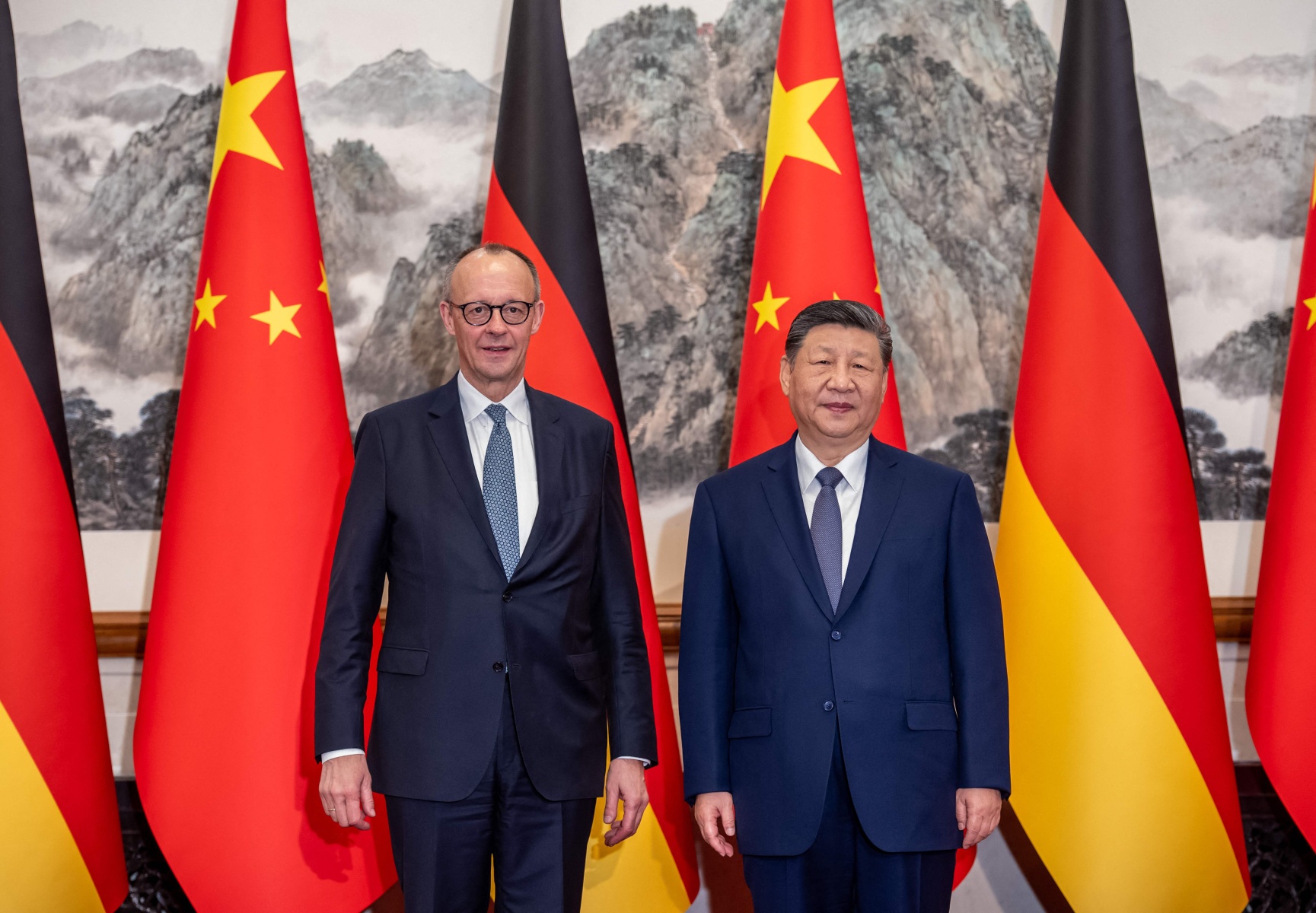
For at least fifteen years, there has been talk of China becoming a great power in the 21st century and now these speculations eventually prove themselves to be true, as China is active in Africa, the Middle-East and its own neighbourhood. For example, the world is seeking China’s support for solving the humanitarian crisis in Darfur. China’s current power derives mainly from its economy. Still, regional and global security can be influenced to a considerable extent through the global economy. In addition, successful economic policy generates resources which can be used as economic aid to offer to other countries and for the development of one’s own defence forces.
Moreover, the global economy makes it possible to influence the domestic policy of other countries. The determining factor of the US economy is the low, but stable dollar. China holds enormous stocks – currently more than one trillion – of US dollars. So the US dollar is, at least theoretically, vulnerable to Chinese manipulation. It is unlikely that China will embark on the destabilisation of the dollar. Why should it? Well, it might provide China with a tactical advantage that, as Henry Kissinger repeatedly pointed out during arms control negotiations, would inevitably transform into a strategic advantage. (Kissinger thought that the possession of certain types of missile granted you at first tactical and, later on, strategic success, even though everybody knew that you would not deploy them.)
At the moment, it is too early to predict China’s particular viewpoints when, in the future, it has acquired the role of a global power, but I am sure that we will soon find out what they will be. Estonia’s relations and contacts with China have traditionally been very good, the latest evidence being the decision to open our embassy in Beijing. We have to keep going in this direction.
The global force of influence physically closest to us is, of course, Russia. Nobody has ever doubted the fact that Russia will rise again. What will be the exact meaning of this ‘rising’ is a different matter altogether. Does it involve a commitment to democracy and European values or the restoration of a Soviet-type one-party system? I believe that, by now, we already know the answer to this question. Until recently, it was also unclear whether Russia’s enormous deposits of natural resources would be used for building a market economy or employed as a strategic weapon – now we have the answer to that one too. Of course, it is premature to forecast how the presidential elections in 2008 will affect these significant trends, but Russia will inevitably influence the security and democracy situation in Europe. Russia’s behaviour is certainly a key issue for Estonia.
As a member of the European Union, we are unwillingly party to a negative process of global import which might be called the ‘closing of democracy’. After the Cold War, the prevailing belief in the victory of democracy was evident all over the world. Francis Fukuyama claimed in his famous book The End of History and the Last Man that the universal process of democratisation signalled the end of history as such.
Today, terrorism has forced even very democratic and developed states to apply special measures to safeguard internal security. This has often led to the legalisation of the xenophobic hate and fear latent in every society.
Politicians are closing borders and economic isolationists have found solid arguments for raising barriers. Attempts are made to create small islands of prosperity and peace in this predominantly unstable and increasingly violent world. We can only imagine the feelings of those countries which have chosen the democratic way as they listen to some EU politicians who want to slam the door of enlargement in their face. This would not only weaken the applicant countries, but would also undermine the ideal of democracy still programmed into the existing world order. Even now, there are many opportunities open to Estonia to decelerate these closing processes and we have, indeed, increasingly exploited them.
Already at the end of the 1970s futuristic literature prophesied that one day conflicts would arise in connection with a clean living environment. In the so-called real world, environmental protection was seen as the hobby of some green activists, while serious security policy was concerned with weapons and economic issues. But now, no-one can escape the damage done to nature. International TV-channels bring it to homes even to the remotest villages, broadcasting pictures of drowning polar bears as the icebergs melt. We all feel the effects of real climate change.
This topic has been raised by internationally renowned politicians who can mobilise the media, such as the former Vice President Al Gore. In the United States, where observers claim that the federal government is sceptical of global warming, state governments have rushed to meet the wishes of their voters and laid down their own environmental norms. For example, Californian rules are stricter than those of many EU members. I believe that environmental protection issues will soon be incorporated into diplomacy and security policy, just as the topic of aiding new democratic countries is already being addressed.
The options of a small state
There are not many options available to us. The most important thing is to realise that we are living in times of transition to yet another world order. Various processes could be mitigated, but the changes induced on September 11, 2001 cannot be reversed. When a new world order is established, new power relations and rules are fixed. It could prove highly detrimental to Estonia if these rules did not correspond to our interests, because Estonia, as a small state, must inevitably follow the rules that apply. A politically favourable and stable world order would benefit Estonia, but stress and confusion would only cause worry for a small state.
We have to fight in order to stay with the winners, not the losers of the new world order (unfortunately, there is no ideal world order even though people have always dreamed of one). The fastest way to drop out of the competition is to lose our positive international image. It is hard to create a good image, but easy to lose one. Despite the fact that Estonia is a member of the EU and NATO, we still have to maintain our image, which can be quite difficult. In today’s world, a tiny problem and the respective comments of a village elder can be broadcast worldwide with the help of news agencies, while ten years ago such matters would have concerned no-one but us. The same applies to governmental authorities. The Estonian Ministry of Foreign Affairs was usually contacted to comment on international issues, but nowadays journalists prefer, for example, the Ministry of Internal Affairs, especially in the case of unsavoury events. If an environmental disaster occurs, reporters call the Ministry of the Environment, not the Foreign Ministry. The recruitment policy of our ministries should take these developments into account.
In order to pursue foreign policy activities in these changing circumstances, we need people – they are our most valuable resource. We have to adopt an interdisciplinary approach to Estonian foreign policy. We need security specialists who can understand the oil business or explain the mechanisms of climate change; we need security experts who can track international cash and trade flows and assess their impact on the world economy; we need – there has been a lot of talk about this – people who can speak Arabic and Chinese and know the culture and history of the respective countries. Our population is 1.34 million. We cannot educate specialists in every area and must find ways to capitalise on what independent and international experts are able to offer.
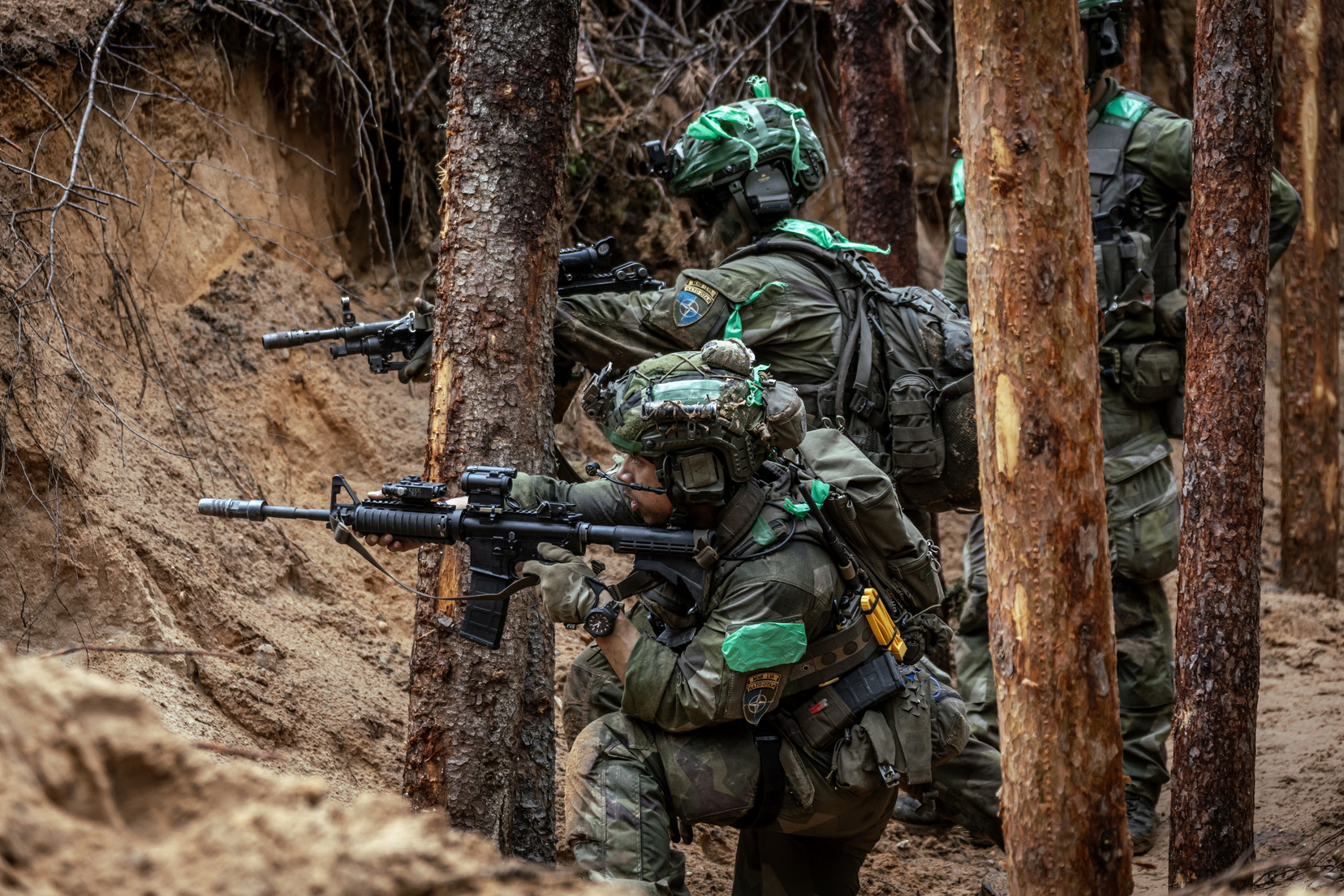
At present, information exchange is the main focus of our foreign policy and we also concentrate on the presentation of our views. However, we could certainly contribute more to the development of practical solutions in order to achieve European common objectives. International law and the wider field of international relations are, in fact, based on case law. The more problems that have been solved effectively, the more weight these precedents carry in international relations. For example, the successful implementation of trilateral Estonian, US and Georgian support schemes provides a practical model for assisting young democratic countries and thereby sets a precedent. The NATO air policing mission in Estonia creates a practical precedent for showing NATO’s concern for our state. All these models are quite useful for us, both at the moment and when future foreign policy norms are established. The stakes are very high and we must make every effort to prevail.