Justinas Lingevicius
Associate Professor, Institute of International Relations and Political Science, Vilnius University (VU IIRPS)

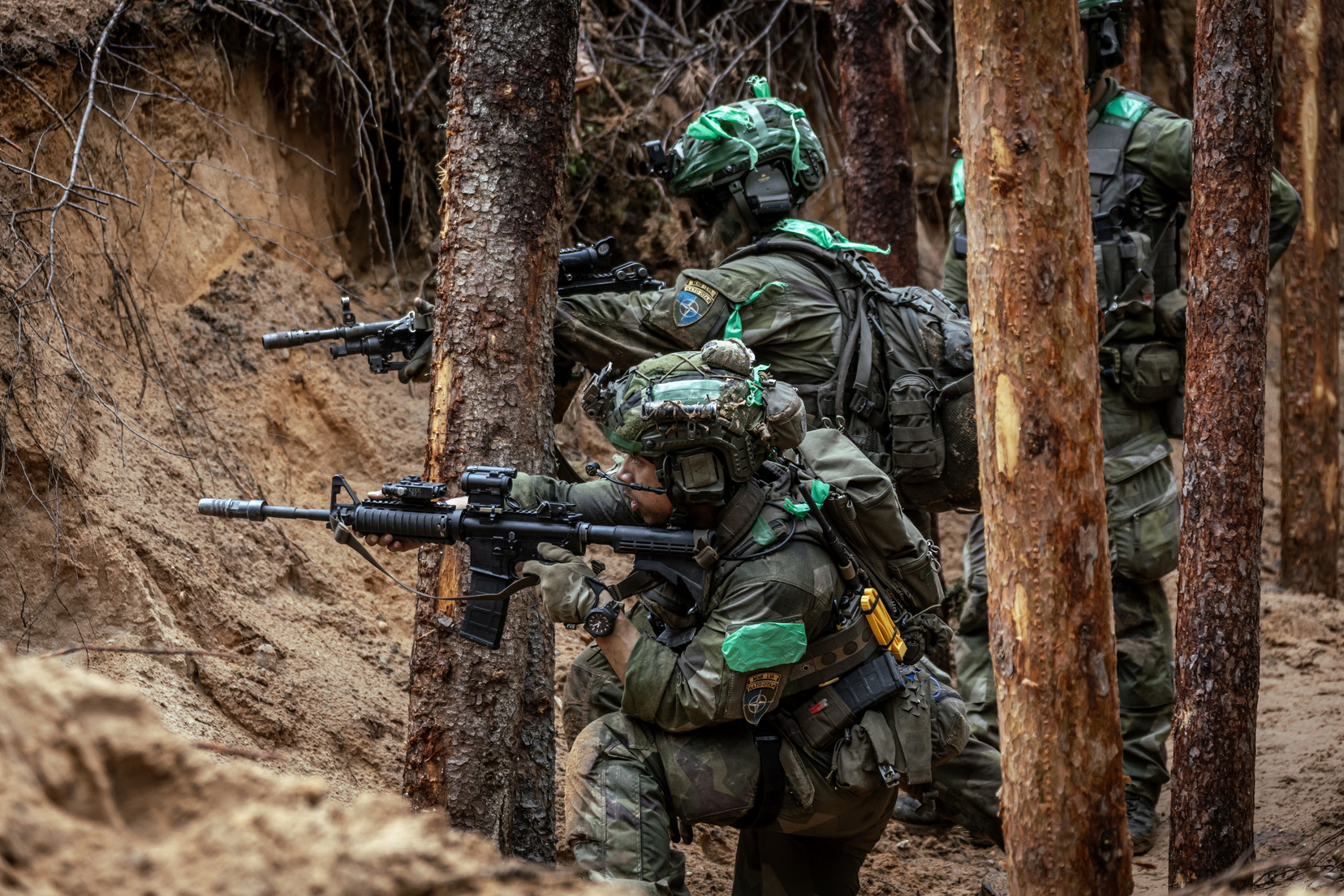
Drone incursions in the Baltic States and Finland have made clear that this is no longer a distant battlefield concern. This brief argues that as the NB8 framework matures into an increasingly like-minded security community, drone cooperation could stimulate market integration. A standardised, modular drone platform architecture, a European drone defence “Platform market” model, could give the countries the economy of scale that they otherwise lack.
The battlefield transformation enabled by drone technology has accelerated dramatically since Russia’s full-scale invasion of Ukraine. Drones now constitute a decisive dimension of modern conflict: they extend the reach of warfare deep into civilian infrastructure, oversaturate air defences, and reduce the cost of delivering lethal effect at scale. Paradoxically, the low unit cost of individual drones inflates the overall cost of conflict, eroding the relative advantage of high-technology military systems and demanding mass rather than precision in response.
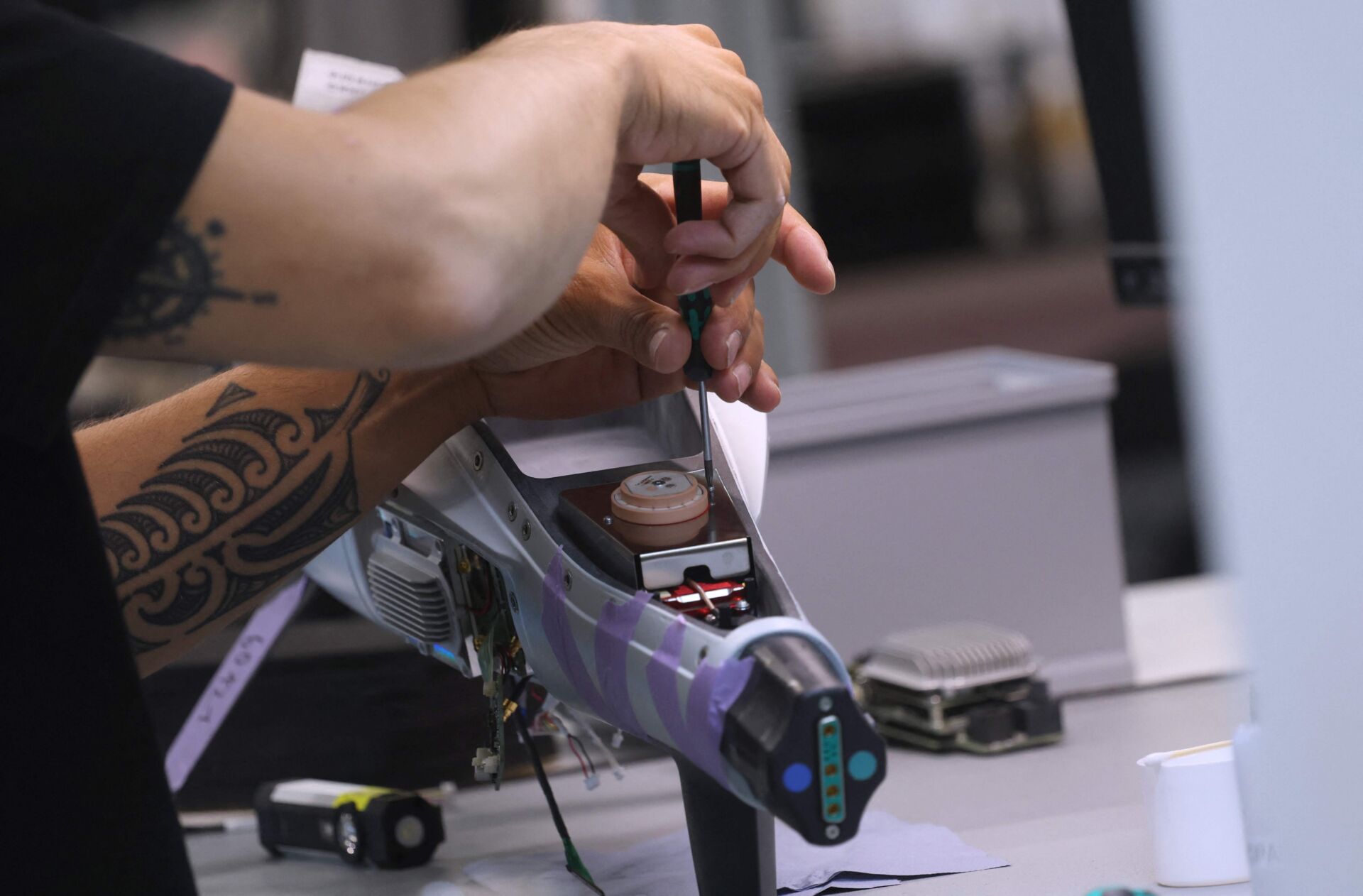
This has direct implications for the NB8 region. Recent drone incursions across the Baltic States and Finland signal a security environment in which hybrid operations like sabotage of civilian and dual-use infrastructure, ambiguous attribution, and persistent low-level pressure are active conditions. The dual-use nature of drones compounds the challenge but also enables markets. Whether fixed-wing, rotary, ground-based, or maritime, drone platforms share core propulsion and navigation architectures that mission-specific modules attach to. This modularity is both a strategic asset and a planning liability, since military drone capability is built from the same commercial, interchangeable components as civilian systems. This tendency means that both civilian and military drone proliferation are not separate problems.
However, the NB8 response to the drone challenge has been predominantly national. Countries are investing in domestic defence industry ecosystems and developing drone-related capabilities at different speeds, rather than through a coordinated regional framework. Governments face domestic political pressure to demonstrate control over critical production capacity, and the urgency of the threat creates incentives to move fast rather than to coordinate.
The important constraint facing every NB8 country is scale. Effective operational response demands large-scale supply, but maintaining substantial stockpiles is inherently difficult as drone technology advances rapidly, systems require frequent software and security updates to remain relevant. No NB8 country can resolve this challenge alone. Although the national ecosystem approach reflects understandable sovereignty instincts, it produces fragmented, competing and unreliable supply chains.
The result is a gap between strategic alignment and practical action. While NB8 countries broadly agree on the threat, they have not yet delivered a common response architecture. This gap creates not only potential issues such as divergent standards, duplicated investment, and incompatible systems. It also sustains public unease in countries where awareness of hybrid threats remains underdeveloped.
The EU has signalled that it understands the urgency. The Defence Readiness Roadmap, released in October 2025, includes the Eastern Flank Watch and the European Drone Defence Initiative as flagships. The European Defence Projects of Common Interest (EDPCIs) under the European Defence Industry Programme (EDIP) come as a newly proposed tool to develop large-scale industrial projects that individual countries cannot develop on their own. Among them is the Drone and Counter-drone Defence (DECODER) project that brings together all EU member states and Ukraine.
Additionally, the European Commission and Ukraine have signed a partnership to bring together Europe’s industrial capacity and Ukraine’s expertise in drone innovation, and to unify diverging bilateral agreements, such as with Latvia and Lithuania. This vision includes cooperation on drone capability building through the creation of the Drone Alliance, based on industry members. However, the structure and selection of the Drone Alliance’s members remain secretive, raising unanswered questions about market and broader impact implications. This is particularly relevant for those not selected for the board, whose national priorities may be affected.
Together, these recent initiatives represent a structural shift in EU defence policy that gives regional actors leverage if they organise themselves to use it. They do not oppose the importance of regional cooperation, but show multiple layers of political, industrial, and technological developments in response to a rapidly changing security environment. The NB8 has every chance to take a leading role in these EU projects, setting the tone for the European defence planning that enables faster development cycles, shared testing infrastructure, and broader deployment while creating the scale that no individual member can achieve.
The central recommendation calls for developing a standardised, modular drone platform architecture for the NB8 region: a European drone defence Platform Market that functions like app stores, but also includes physical modular hardware components. Under this model, participating nations would mass-produce drone platforms in domestically secured facilities, preserving sovereign production capacity as a non-negotiable foundation. Common agreed standards would govern modularity: developers could design, license, and trade mission-specific modules, covering both civilian and military applications, traded in an open, competitive market with comparatively low barriers to entry. Such standardisation would also enable further exploration and implementation of what could be described as responsible technology, implementing the EU’s frameworks for safe digital products in ethical and transparent ways. Market competition would stimulate innovation, while domestic platform production would secure strategic resilience.
Countries that choose not to invest in domestic platform production infrastructure would still have access to certified, standards-compliant platforms from within the NB8 market, ensuring both operational interoperability and access to the module ecosystem. Domestically protected manufacturers could, where appropriate, acquire licences to incorporate market-derived design improvements, ensuring that innovation diffuses across the production base rather than remaining siloed in individual national programmes.
This architecture addresses the core political obstacle to regional coordination, where drone policies are predominantly attached to national capability building. This platform should not be seen as challenging or limiting individual needs, but as expanding them through established openness and market conditions. Each country remains free to develop its own core capabilities and tweak the designs to fit their individual needs while also participating in a common market enabled by the standardised platform design. Importantly, it creates the scale NB8 countries individually lack, establishes a credible regional position for engagement with EU instruments, and provides a natural framework for coordinating drone cooperation with Ukraine on shared standards rather than divergent bilateral terms. More broadly, this form of regional integration not only brings immediate focus to technological and industrial capacity building but also further integrates security cooperation that may be useful within NATO or other regional formats such as the Joint Expeditionary Force (JEF).
The NB8 should lead the development of a common modular drone platform standard within the EU. Member states should agree on and establish the governance framework for a shared module market where the NB8 could provide a sandbox-type environment and example. Domestically secured platform production should be treated as a sovereign priority; module development should be opened to competitive innovation under common standards.
Coordinate NB8 engagement with Ukraine. Rather than proceeding through divergent bilateral arrangements, NB8 countries should develop a joint framework for drone cooperation with Ukraine, building on the Defence Readiness Roadmap’s EU-level mandate and translating it into concrete capability exchange, shared lessons from battlefield deployment, and aligned standards.
Use NB8 to leverage EU instruments. EU member states within NB8 should take the lead in coordinating access to EDPCIs, the European Drone Defence Initiative, and related financial mechanisms – framing NB8 as the regional vehicle through which Eastern Flank priorities are translated into EU-level commitments. Nordic participation is essential to the credibility and scale of this claim.
Treat NB8 as an open architecture. The framework should be designed for incremental membership and openness to broader European partners over time, ensuring that the Platform market model can scale beyond its founding members as the European drone ecosystem develops.
Read also:

About the NB8 Policy Brief Series
The NB8 series of jointly published topical briefs is a collaboration between eight leading institutes in the Nordic–Baltic region. Its purpose is to deepen understanding of the evolving security, political, and societal dynamics shaping the Nordic–Baltic region in an era of renewed great-power competition. The series aims to generate shared insight, foster informed policy dialogue, and contribute to the region’s strategic resilience. The views expressed in the policy briefs are those of the author(s) and do not necessarily reflect the positions of the participating institutes.