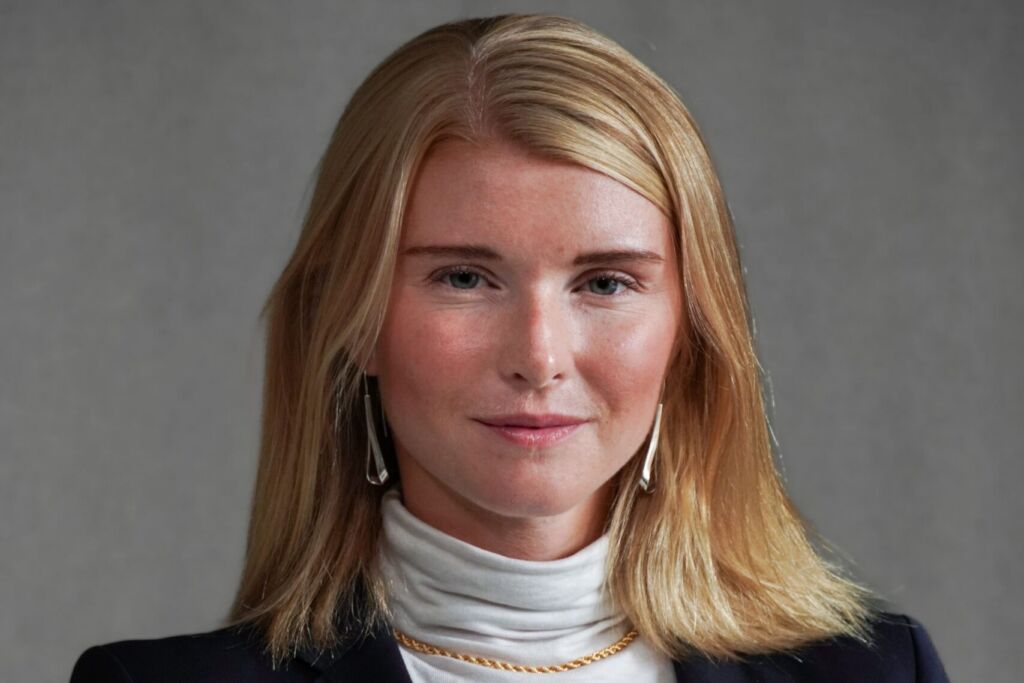
Kristin Haugevik
Research Director and Research Professor at the Norwegian Institute of International Affairs (NUPI)
The rules-based, western-led international order has both served and suited Norway well. Present-day Norwegian foreign policy has been organised around a self-identity as an international rule-follower and team player, a norm entrepreneur and 'do-gooder', a state that not only stands by common rules but also stands up for values and principles when needed. From a political power perspective, Norway has considered itself a state capable of 'punching above its weight' on the world stage, converting available resources and skills into real-life political influence. In Prime Minister Støre's words, the aspiration has been "to make a difference." Now, the old order has been disrupted. This means small states like Norway need to adapt.
In his annual foreign policy address to the Storting in March 2026, Norway’s Foreign Minister Espen Barth Eide described the era that emerged after the Second World War as a golden age: “Out of the ruins left by the world wars grew a new international order.” That order manifested itself in rules and institutions, in free trade, and in economic integration. All of this aligned well with Norwegian foreign policy values and interests. As Eide put it, “Two main pillars have underpinned Norwegian foreign policy for 80 years: the UN and international law on the one hand, and the transatlantic alliance, with the US as the key guarantor of our security, on the other.” [2]
During the period Eide refers to, understanding how the UN works, how to manoeuvre within its diplomatic setting, and how to translate available resources into access and impact in Washington, DC, became key skills in the Norwegian foreign policy repertoire.[3] Norway’s strategic location in the High North and its shared border with Russia have been additional assets, earning it a status not only as ‘NATO’s eyes and ears in the north’ but also as a state with longstanding knowledge of how to manage relations with Russia. (The latter argument was invoked when Prime Minister Jonas Gahr Støre and Finland’s President Alexander Stubb initiated their much-debated phone call with Russia’s President Vladimir Putin in October 2026.[4]) Norway’s large pension fund, its close and trust-based collaboration with Nordic neighbours, and its well-practised balancing act between autonomy and adaptation in relation to the EU add further flavour to the repertoire.
Yet carefully cultivated skill sets are less of a comparative advantage if the overall game shifts and the rulebook is rewritten. Or put differently: being a skilled chess player is of limited value if the leading players have moved on to Monopoly or Risk. For a long time, Norway’s preferred approach was to seek gradual improvement and reform of the existing order. That option appears increasingly difficult to pursue. For Norway, as for other small and middle powers, today’s international environment requires manoeuvring across multiple arenas, shifting constellations, and evolving rules.
After the Second World War, Norway’s foreign and security policy identity as an Atlanticist took shape. The Atlanticist orientation was reflected in early policy choices, including Norway’s decision to join NATO and its cautious approach to early European integration initiatives.[6] Inside NATO, the United States replaced Britain as Norway’s primary security guarantor, solidifying an effective “alliance within the alliance.”[7]
The Atlanticist orientation was reflected in Norway’s decision to join NATO and its cautious approach to early European integration initiatives.
Fast forward to the present, and the United States’ position as Norway’s foremost partner in security and defence remains intact, but the idea of a broader community of values—and interests—has come under critical scrutiny. Turbulence and domestic debate notwithstanding, under the first Trump administration, Norwegian leaders insisted that the US–Norway relationship was relatively resistant to changes in political leadership or disruptive rhetoric on the international stage. Instead, they foregrounded “what worked” in the Alliance.[8] Government officials made a distinction between political “noise” and well-functioning cooperation, highlighting the strengthening of security and defence ties during this period.[9] This pragmatic position was aided by the deterioration in Russia–western relations from the mid-2010s onwards, and by NATO’s renewed focus on collective defence and deterrence in its own neighbourhood.
Trump’s return to the presidency in 2025 marked the transition to a decidedly different era. Whereas Trump 1.0 had tested assumptions about shared values, Trump 2.0 also challenged assumptions about shared interests. For Norway’s part, a defining moment came with Trump’s renewed bid to “acquire” Greenland from Denmark, an ambition expressed so vocally in the opening weeks of 2026 that the US president eventually had to clarify that he would “not use force” against a fellow NATO member.[10] Against the backdrop of Russia’s war in Ukraine, Trump’s statements on Greenland struck at principles of sovereignty and territorial integrity of central importance to Norwegian foreign policy. The image of grave Nordic leaders around the table in Danish Prime Minister Mette Frederiksen’s home in Copenhagen sent a message of unwavering Nordic solidarity in response to Trump’s demands.
Hedging has become an increasingly explicit and politically acceptable strategy in both the official discourse and the wider public debate.
When Canada’s Prime Minister Mark Carney spoke in Davos in early 2026—one day before Trump’s clarification on Greenland—he diagnosed a world order “in the midst of a rupture, not a transition.”[11] Calling for unified action from like-minded middle powers, Carney’s speech echoed themes already increasingly present in the Norwegian political debate. While there is no debate about NATO’s or the United States’ enduring importance to Norwegian security, hedging has become an increasingly explicit and politically acceptable strategy in both the official discourse and the wider Norwegian public debate. As put by Prime Minister Støre: “We are now giving priority to fostering closer, more clearly defined cooperation with our northern European Allies. We call this our hedging strategy.”[12]
Prior to Russia’s invasion of Ukraine and Trump’s return to the presidency, scholars noted a broader shift in international cooperation towards ‘deinstitutionalisation,’ ‘ad hoc mechanisms’, ‘club logics’, and ‘minilateralisation’.[13] In the Nordic region, a logic of ‘flexilateralism’ seemed to take hold—a pragmatic approach in which the task at hand determines the forum and the coalition.[14] Russia’s invasion of Ukraine ended decades of non-alignment on the part of Finland and Sweden. When both states applied for NATO membership, the remaining formal barriers to Nordic defence collaboration and integration were removed. Bi- and trilateral partnerships within the Nordic region were also strengthened. For Norway, the re-energised partnership with Finland stands out: the latter’s new status allows not only for closer security and defence cooperation, but also for highlighting Finnish–Norwegian political and strategic like-mindedness more broadly.[15]
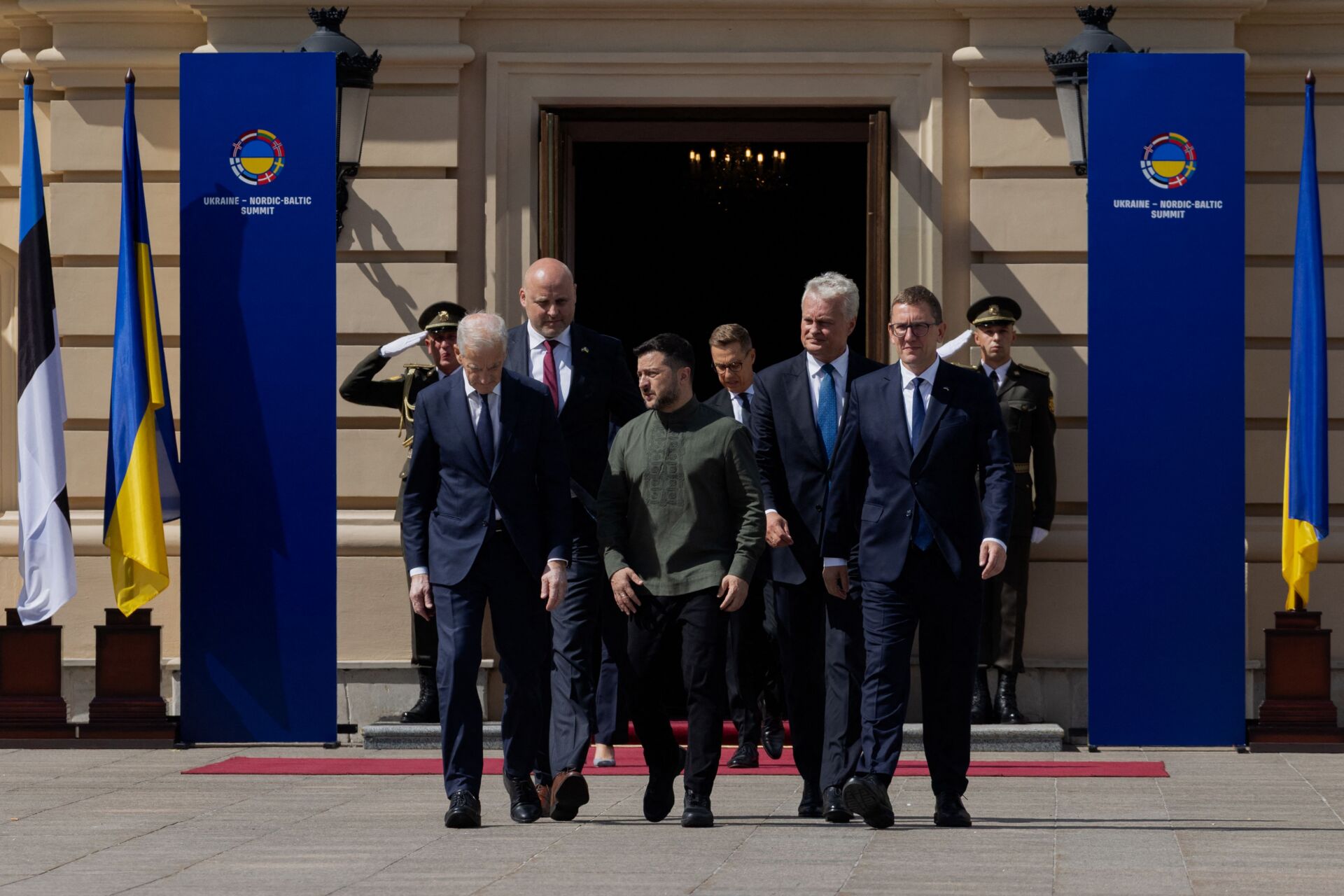
The renewed Nordic unity has also flourished within a wider Northern European context, with the Baltic states frequently included through various NB formats, alongside states like Britain, Germany, the Netherlands, and Poland. Britain—Norway’s closest partner historically—has also ‘returned home’, and is once again a prioritised and visible security and defence ally in the North.[16] The British-led Joint Expeditionary Force (JEF) has evolved from a NATO-adjacent military mechanism into a more autonomous political and security framework, providing a convenient forum for Northern European states with broadly aligned security interests. Recently, JEF entered into a partnership with Ukraine. In 2026, Canada submitted an application for membership, reflecting its growing engagement with Northern Europe following the trade row with the United States and Carney’s call for middle-power action. Established institutions and platforms—the UN, NATO, the EU, the Arctic Council, and the Nordic frameworks—remain central in official Norwegian foreign policy discourse. However, as these institutional formats struggle to maintain unity, more flexible arrangements appear increasingly relevant for discussing and anchoring policy initiatives, complementing a growing web of bilateral dialogues and political contacts. Alongside growing defence spending, these strengthened partnerships and security arrangements at the European level could help prepare the ground for a stronger European pillar within NATO.
As institutional formats struggle to maintain unity, more flexible arrangements appear increasingly relevant.
Still, for Norway, one key avenue for deeper European integration is at arm’s length. While Norway continues to align closely with the EU, a political stalemate persists on the question of membership. At present, it is difficult to envisage either a government committed to pursuing Norwegian EU membership or a ‘yes’ majority among the parties represented in the Storting. Public opinion also remains stable, with support for the ‘no’ side even increasing slightly in recent polls.[17] While the changing security environment has led Norwegians to stockpile supplies in their basements, it seems not, so far, to have pushed them towards EU membership.
At times, the movie title “Everything, Everywhere, All at Once“ may be the most fitting description of present-day international politics. For small and middle powers, returning to business as usual no longer seems like a realistic outcome. Luckily, such powers tend to specialise in adaptation.
Adaptation includes national defence spending, total and civil defence, and rural and regional policies.
While this brief has focused on adaptation through investment in subregional and regional partnerships, for Norway, adaptation to the changing world order also has distinct national and subnational expressions. This includes a significant increase in national defence spending, a reinforced focus on total and civil defence, and strategies to strengthen rural and regional policies in Northern Norway—including functioning infrastructure and business development—which have become an integral part of national security thinking and planning.[18]
From this analysis, three considerations for policymakers follow:
Keeping the vision of an international community alive. While focusing on the local and the near abroad makes sense in times of crisis and when resources are scarce, small powers like Norway cannot afford notto invest in growth, development, and relations further away. The interconnectedness of the world is undeniable, and most challenges cannot be addressed locally alone. If European states retreat to prioritising their own neighbourhood ‘first’, then we can hardly expect the global south to stand with Europe on issues like Ukraine.
Remembering that defence is not only about safeguarding what we have, but also about protecting who we are. Northern European states are now —sensibly— investing heavily in security and defence. The Norwegian government has openly raised the possibility of a war involving Norway. However, as the Covid-19 crisis demonstrated, real dilemmas can arise between saving lives and preserving core societal functions and democratic principles. We should remember that when war preparations and defence take centre stage, other societal priorities may be overshadowed or absorbed by the security agenda.
Continuing also to interact with the less like-minded. European integration helped repair the deep wounds inflicted on interstate relations after the Second World War. It also helped prevent new wars from emerging in Europe in the early post-war years, allowing European states to identify common, foundational values and principles. Wars can be won, but estrangement cannot be mediated through military tools. Even when it appears hopeless, states that maintain the vision of liberal values and a rules-based order must continue to invest in integration, interdependence, and diplomacy.
[1] I would like to thank Kristi Raik, Ole Martin Stormoen, Øyvind Svendsen, and Julie Wilhelmsen for valuable comments on an earlier version of this brief.
[2] Espen Barth Eide, “Foreign Policy Address to the Storting,” Regjeringen (Norwegian Government), 3 March 2026.
[3] Kristin Haugevik and Ole Jacob Sending, “The Nordic Balance Revisited: Differentiation and the Foreign Policy Repertoires of the Nordic States,” Politics and Governance, 8, no. 4 (2020): 441-450.
[4] While Norway’s political relations with Russia remain constrained by the wider international climate, elements of the traditional Norwegian ‘reassurance’ policy persist in the North, including in relation to fisheries, search and rescue, and border management. Some ‘limited diplomatic and military contact’ also remains. See: Jonas Gahr Støre, “Russia Has Changed. So Has Our Relationship as Neighbours,” Norwegian Government, 13 May 2026.
[5] This alludes to We Who Loved America (Vi som elsket Amerika), a book by Jens Bjørneboe.
[6] Albeit accompanied by a policy of balance between deterrence and reassurance vis-à-vis the Soviet Union, including self-imposed restrictions on US military presence in Norway.
[7] Rolf Tamnes, Oljealder 1965–1995: Norsk utenrikspolitikks historie (Oslo: Universitetsforlaget, 1997), 61.
[8] Ingeborg Nortvedt Bjur and Johannes Gullestad Rø, “Norges allierte tålmodighet: USA-relasjonen i norsk sikkerhetspolitikk under utenriksminister Ine Eriksen Søreide 2017–2021” [Norway’s Allied Patience: The U.S. Relationship in Norwegian Security Policy under Foreign Minister Ine Eriksen Søreide, 2017–2021], Internasjonal Politikk 81, no. 1 (2023): 77–90, 78.
[9] Kristoffer Rønneberg, “Eriksen Søreide om USA under Trump: «Det er så mye støy»” [Eriksen Søreide on the United States under Trump: “There Is So Much Noise”], Aftenposten, 7 October 2020.
[10] Donald J. Trump, “Special Address to the World Economic Forum,” Davos, speech, World Economic Forum, Davos, 21 January 2026.
[11] Mark Carney, “Special Address to the World Economic Forum,” Davos, speech, World Economic Forum, Davos, 20 January 2026.
[12] Jonas Gahr Støre, “Address to the Storting on the Security Policy Situation,” speech, Storting, Oslo, 12 February 2026.
[13] Jonathan White, “The De-institutionalisation of Power Beyond the State,” European Journal of International Relations 28, no. 1 (2022): 187–208; Kristin Haugevik, “United clubs of Europe: Informal differentiation and the social ordering of intra-EU diplomacy,” Cooperation and Conflict, 58 (3) (2023): 374-392.
[14] Kristin Haugevik, Øyvind Svendsen, Katja Creutz, Mikkel Runge Olesen, Anna Lundborg Regnér, and Jakob Linnet Schmidt, Security Debates and Partnership Choices in the Nordic States: From Differentiation to Alignment, NUPI Report no. 1/2022 (Oslo: Norwegian Institute of International Affairs, 2022).
[15] Kristin Haugevik, Katja Creutz, Matti Pesu, and Øyvind Svendsen, “Becoming Allies: Finland, Norway, and the Nordic Security Community after Russia’s Invasion of Ukraine,” Nordic Review of International Studies 3 (2024): 7–23.
[16] Kristin Haugevik and Øyvind Svendsen, ‘Global Britain’ and security in the near abroad. Leadership through flexilateralism? NUPI Research Paper No. 3/2022 (Oslo: Norwegian Institute of International Affairs, 2022).
[17] “Nei-siden strammer grepet” [The No Side Tightens Its Grip], TV2, 11 August 2026.
[18] The Norwegian Ministries, “Norway in the North. A High North policy for a new era,” Strategy, 26 September 2025.
Disclaimer: The views and opinions contained in this paper are solely of its author(s) and do not necessarily represent the official position of the International Centre for Defence and Security or any other organisation.
More on the brief series: Small States