On 13 November 2025, the International Centre for Defence and Security (ICDS) held a presentation and discussion of a recently published report, "Between Giants: Central Asia Balancing China, Russia, and the Rest," a project supported by the Georgian Foundation for Strategic and International Studies (GFSIS) and Estonian School of Diplomacy (ESD).
The first half of the event—the presentation by ICDS research fellows, Dr Sanshiro Hosaka and Toomas Hanso—mapped the spheres of foreign influence in Central Asia and identified the areas where Russia and China compete, contest, coexist, or coordinate. Of those, trade, investment, energy generation and supply, as well as critical and transport infrastructure, are the starting point to understand this complex interplay.
For instance, China dominates new physical connectivity in all Central Asian states. However, in digital connectivity, there is a clear division of labour, with Chinese hardware and Russian software commanding the local markets. In people-to-people exchanges, Russia is still ahead. Yet, both Russia and China seem to struggle with public sentiments and perceptions due to historical, economic, and ethnic minority issues.
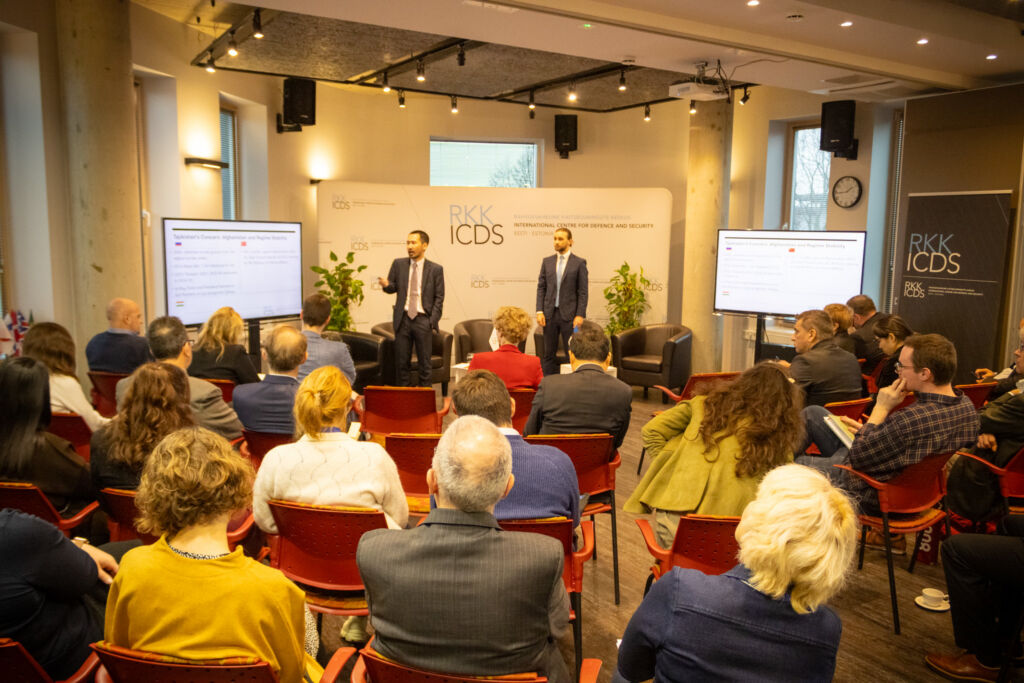
Security and counterterrorism dimensions remain high on the agenda, where Russia-led CSTO and China-led SCO as the main frameworks and concerns, such as the situation in Afghanistan and regime stability, determine both the multi-vector foreign policies of Central Asian states and their intraregional cooperation.
This comprehensive analysis of traditional as well as emerging ties between the Central Asian states and their powerful neighbours, in turn, allows pre-selecting the most promising areas where the EU—and the west more broadly and Baltic states in particular—can contribute with in-demand cooperation initiatives. Specifically, the authors recommend focusing on enhancing regional cooperation (the C5+ format) and strategic autonomy, targeted investments, education push, sharing economic experience and best practices in finance, value-based security engagements (border security, asylum processing, and combating human and drug trafficking), and coordination in matters related to Afghanistan.
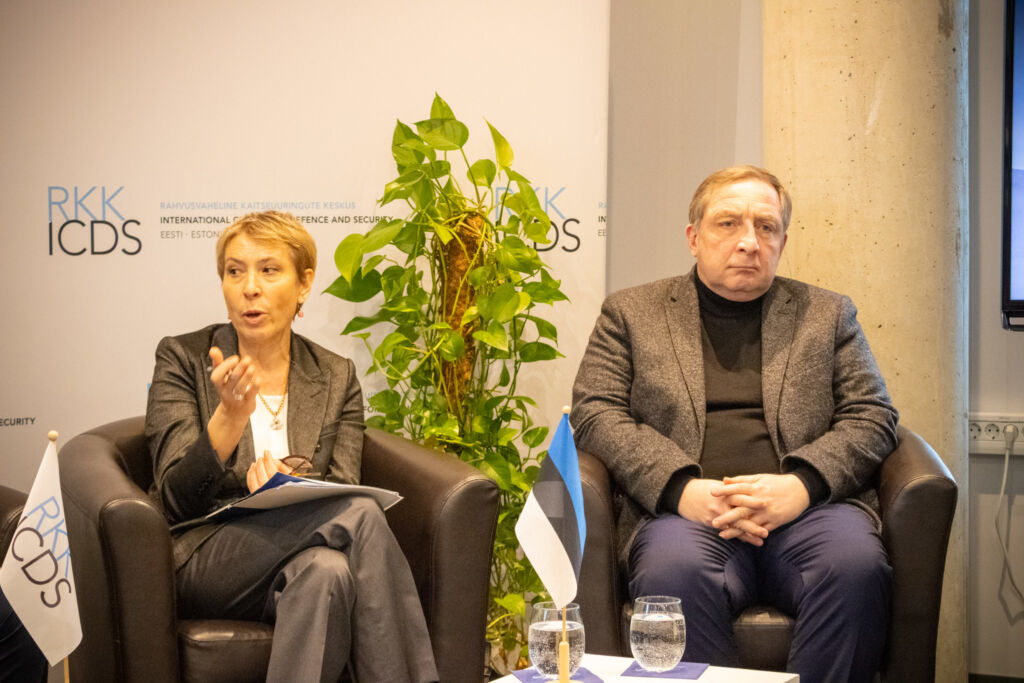
The second half of the event saw Dr Eka Metreveli, President of the GFSIS, and Amb Alex Petriashvili, Senior Fellow at the GFSIS, join a panel discussion moderated by Helga Kalm, Deputy Director and Head of the Foreign Policy Programme at the ICDS. It was noted that in Central Asia, as much as in other regions around the world, China has been eroding Russia’s sphere of influence—but not replacing it. Russia has, nonetheless, maintained an assertive posture, but has had to divert resources to the war in Ukraine. This has, in turn, given the Central Asian states time and space to expand contacts beyond traditional partnerships.
Simultaneously, regional integration has visibly improved over the years, with the effort to ‘build the region’ spearheaded by Uzbekistan and generating interest in, for instance, neighbouring Azerbaijan—an important player in interregional connectivity. Taken together, these factors bring about a momentum for the EU to develop relations with the Central Asian states, not least driven by good will in the region itself, the panel concluded.
The report is available here: Between Giants: Central Asia Balancing China, Russia, and the Rest
More photos: Flickr