November 16, 2026
NB8 seminar: War is not a spectator sport
The Ukraine peace process is moving, but it does not seem to be getting us closer to the end of the war. On 12 November, the ICDS hosted directors of the leading Nordic-Baltic think tanks for a seminar on regional and European security in the shadow of the Russia-Ukraine war.
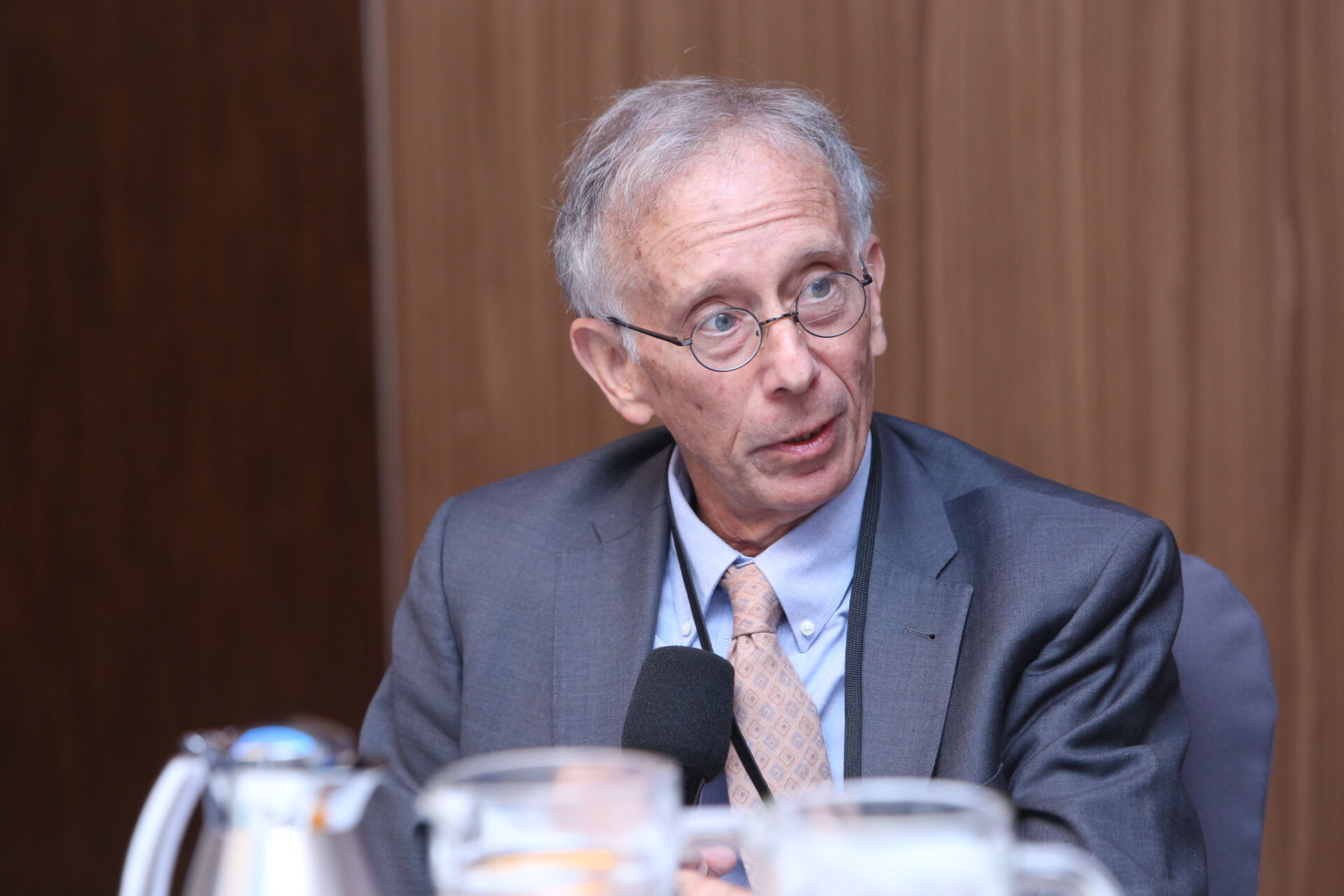
Jakob Hallgren, Director of the Swedish Institute of International Affairs (UI), Hiski Haukkala, Director of the Finnish Institute of International Affairs (FIIA) and Margarita Šešelgytė, Director of the Institute of International Relations and Political Science at Vilnius University participated in a discussion on “Nordic-Baltic security in the shadow of the Russia-Ukraine war: How do NB8 countries assess and address the threats?”, moderated by ICDS director Kristi Raik.
Main points from the discussion:
- The war is not going well for Ukraine — it is fragile heading into winter — and now it is also in danger of losing the peace. There is a recurring theme in the US-Russia track: talks produce initiatives that translate into pressure on Ukraine, and Europe has to scramble to prevent the worst. So far, it has managed to do so, but the overall direction favours Russia. Moscow is getting one concession after another from the Americans, and Europe is being cornered. Is Russia too jubilant? For the time being, it is feeling emboldened and is not in a negotiating mood. Moscow still wants it all. However, its old demands on Europe were unacceptable in 2021, and they are unacceptable now.
- Is Russia waging a shadow war on Europe, or just a war? The risk of a military incursion has increased. That probability, as well as Europe’s vulnerability, depends on the peace talks and the situation on the ground in Ukraine. An attack would be meant not only as a humiliation to NATO but as an ambition to ‘reclaim former Soviet territory’.Yet the Nordic-Baltic region is not an easy target. We used to be underprepared, but a great deal has changed in five years. We are fortified, our procurement and capabilities have gone up, Germany is fully committed to defending the region, and total defence and societal preparedness have advanced. So, Russia’s objective is to divert attention from Ukraine and to weaken what makes Europe strong — NATO and the EU. It goes after what it considers more important targets, such as Germany, for its weight in providing military support for Ukraine, while the Nordic-Baltic states are a sideshow.
- The Democrats’ majority in Congress may not translate into changes in US foreign and security policy. Meanwhile, we are not yet ready to defend ourselves against Russia without the US. Deterrence is a psychological concept: Putin has to believe he will pay the costs, and for now those costs are associated only with the US. The current messaging — around peace talks, the potential withdrawal of US troops, and upcoming elections in major European countries — comes at a very bad time and is seen in Moscow as a window of opportunity, a dangerous moment both politically and militarily.
- There is fatigue in many European countries with keeping Ukraine and the war on a priority list, given different threat perceptions — especially at the societal level. Where it is not a question of survival, it leaves room for manoeuvre.
- Our responsibility is long-term predictability in supporting Ukraine — we can keep talking for as long as Ukrainians keep fighting and stay resilient. Europe needs to define and frame victory, and a theory of victory. We do not want Russia to prevail or Ukraine to lose horribly, but beyond that there is much uncertainty with regard to Europe’s goals. Without a strong European position, we cannot bring forward proposals or take the initiative. We need to be more ambitious and bold to steer the conversation in the direction we want.
- There is no room for complacency. War is not a spectator sport. We must support Ukraine so that it secures the peace plan it deserves and the one that will also suit wider European security.
More photos from the event.
In 2026 eight leading institutes in the Nordic–Baltic region are jointly publishing a series of briefs to deepen understanding of the evolving security, political, and societal dynamics shaping the region in an era of renewed great-power competition. The series aims to generate shared insight, foster informed policy dialogue, and contribute to the region’s strategic resilience. Read the briefs: https://icds.ee/en/nb8-series-chinas-green-statecraft-and-nb8-arctic-security/.